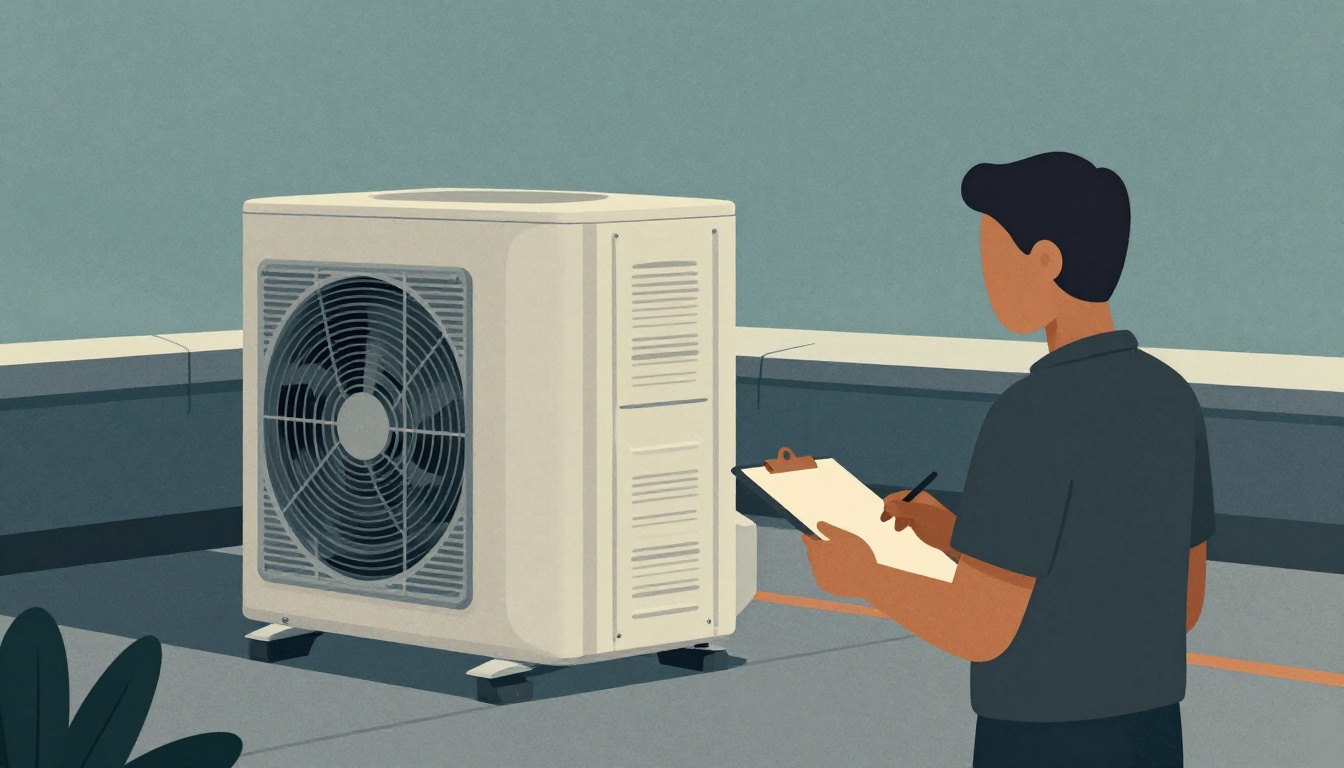
Rooftop units are the most weather-exposed and least-visited HVAC equipment in a commercial building, so small problems — a slipping belt, a clogged drain pan, a stuck economizer damper — quietly turn into emergency calls during peak load. The fix is not more reactive service; it is a written preventive maintenance (PM) checklist with defined tasks and frequencies that a technician actually works through on every scheduled visit.
Which standard establishes minimum HVAC inspection and maintenance requirements for commercial buildings, including defined task frequencies?
Select one answer.
Start with a standard, not a guess
ANSI/ASHRAE/ACCA Standard 180 establishes minimum HVAC inspection and maintenance requirements that preserve a system's ability to achieve acceptable thermal comfort, energy efficiency, and indoor air quality in new and existing commercial buildings (Better Buildings, U.S. DOE). It is the only ASHRAE standard that prescribes specific inspection and maintenance tasks with defined frequencies for commercial HVAC (OxMaint). Build your RTU checklist on that framework, then layer in the manufacturer's service instructions and your site's written sequence of operation.
Quarterly tasks (every visit)
These are the recurring items that keep a packaged rooftop unit alive between seasonal startups:
- Replace air filters.
- Inspect belts and pulleys for wear and alignment.
- Clean drain lines and pans.
- Check refrigerant levels and pressures.
- Tighten electrical connections.
- Inspect fan motor and blades.
- Verify thermostat operation and settings.
This quarterly set is the baseline most facility managers should be able to document (CKP HVAC).
Semi-annual and annual tasks
Deeper checks belong on a semi-annual or annual cycle, typically timed to spring and fall startups:
- Check power supply operation and measure volts/amps of condenser fan motors.
- Check starters and contact surfaces.
- Examine refrigerant charge and check site glasses.
- Check superheat and head pressure controls.
- Inspect all safety controls and operating controls.
- Check fan sheaves for alignment and wear, and inspect fan-bearing supports.
- Check motor supports and hold-down bolts.
- Inspect damper operations, linkages, and damper motors.
- Look for oil or refrigerant leaks.
This semi-annual list mirrors the checks contractors use to catch degradation before failure (RasMech).
Seasonal startup items
Spring and fall are the ideal windows because temperatures are moderate, letting technicians test heating and cooling performance without summer or winter extremes (Binder Heating). Add these to the seasonal visit:
- Clean condenser and evaporator coils.
- Test economizer function.
- Check outdoor air damper position.
- Perform combustion analysis for gas-burning appliances.
- Check ignitor, flame sensor, and capacitors.
That seasonal list comes from utility-program guidance for commercial RTUs (Center for Energy and Environment).
What PM prevents
Without routine inspection, RTUs are vulnerable to dirty or clogged coils, refrigerant leaks, worn belts and bearings, electrical failures, and drain line blockages that can lead to roof leaks and mold growth (CKP HVAC). A single failed commercial RTU compressor costs roughly $3,000 to $8,000 to replace, plus emergency labor, while systematic quarterly PM costs a fraction of that (OxMaint).
How to put the checklist to work
- Assign a frequency to every task — quarterly, semi-annual, or annual.
- Record a reading against a target for each item (subcooling, minimum outdoor-air position, amp draw), not just a pass/fail.
- Print one visit record per roof per visit, plus a per-unit detail sheet for spring and fall startups.
- Keep the checklist separate from the manufacturer's service instructions and your site's sequence of operation — it supplements, not replaces, them.
- Review the plan when conditions change, such as a new tenant load or a repeated fault.
Quick reference checklist
- Filters replaced
- Belts and pulleys inspected
- Coils cleaned
- Drain pan and line cleared
- Refrigerant levels and pressures checked
- Electrical connections tightened
- Fan motor and blades inspected
- Economizer function tested
- Outdoor air damper position verified
- Safety and operating controls checked
- Leaks inspected
How the Featured Expert Can Help
Air Distribution Supplies offers HVAC parts and supplies for commercial projects, with a focus on grilles, registers, louvers, dampers, and fans. The company emphasizes reliable and affordable service and invites bids and quotes, which suits contractors and facility teams sourcing components for RTU maintenance and repair work. You can request a quote at Air Distribution Supplies.
Test your knowledge
Before you build your own RTU checklist, check whether you know which standard sets the baseline for commercial HVAC inspection and maintenance frequencies.